Thursday, January 7, 2016

Talking About a Revolution

To appreciate the story I am going to tell you, it is important to understand that we were a group of outsiders who came together to make theatre.
We were technicians and designers-in-training who had spent the majority of our undergraduate careers developing and realizing the visions of performers, directors and other faculty and were now going to use their tools to produce something special.
In a very real sense, it was an act of revolution; the workers were seizing the means of production and Don Childs was our leader.
The finished product was a collective creation representing a singular vision.
From the very beginning, from our very first meeting, those of us starting our college careers and learning how to make theatre were learning right along side our primary instructor. We were adjusting to college life and Don was learning how to adjust to life in a new country and how to communicate in a new language. Don taught us about design, technology and visual communication and we taught him and the staff Technical Director and fellow transplant Eric Mongerson about Montreal.
It was 1980 and a time ripe for revolution.
Ten years earlier, members of the Front de liberation du Quebec (FLQ) had kidnapped the British Trade Commissioner and the provincial Minister of Labor. Most of my classmates would have had clear memories of Canadian soldiers on the streets of Montreal with their automatic weapons at the low-ready position. There were still-fresh memories of exploding mailboxes on street corners and a growing sense that the province of Quebec needed to redefine its relationship with the rest of the country.
During the Seventies the liberation of the province and its six million French-language inhabitants evolved from armed conflict and toward the political arena. It was during this time the government moved to enact laws protecting the French language as the official language of the province. Among other things this resulted in the establishment of a de facto language police whose job it was to make sure that all signage was in French.
Despite these gains, there was a growing sense that protecting the language was not enough and the public elected the once-marginalized Parti Quebecois to govern and the primary plank in their platform was to work for the separation of the province from the rest of the country.
It was just three months before our classes began that the provincial referendum on Separation was held and, while there was a collective sense of relief at its failure, there was a clear sense that the debate was not over.
Much ink has been, and will continue to be, spilled on the subject of Quebec politics and its relationship with the rest of Canada, but it is important to understand at least this much if the rest is to make any sense.
***
The dynamics of academic theatre have much in common with the questions of identity that saturate Quebec and, indeed, the entire country: there are English and there are French, there are actors and directors, designers and technicians, onstage people and backstage people. Each of these groups is confident that theirs is the most difficult and most misunderstood of any other identity.
Further complicating the dynamics was the identity of the school, Concordia University.
The school was born out of the union between urban Sir George Williams University and the suburban Loyola College. These were commuter colleges that were the number two and three horses in a three-horse race with the more well-known McGill University. Loyola had a more traditional campus setting with detached buildings and lots of green spaces. The Sir George campus consisted of a single office tower surrounded by many repurposed brownstone-style annexes. Loyola was where the Theatre Department offices were located and Sir George had the primary performance space and was home to the design and technology students.
For most of the year, we built sets downtown free of distractions and interruptions except when the actors insisted on using those sets and, invariably, breaking them.
It was into this world that Don Childs stepped.
The first thing that you noticed about Don was actually something you heard. It was the slow gait that I associate with horses walking across flagstones. You heard the sound of his cowboy boots long before you would see the cowboy hat, the western shirt and the walrus-like mustache.
It was late August, 1980 and the new students were gathered in the D.B. Clarke Theatre for orientation. We were to be introduced to the faculty and provided some sense of what we were in for.
I remember very little of that meeting except that there was a two-sided blackboard in an oak frame on the stage and that, during his presentation, Don had promised to set it on fire. He didn't personally deliver on that promise that day, but the theatre did catch fire about a year later—but that's another story.
That first year was a blur. The first semester was especially hectic as we had to produce seven shows between September and December. The previous spring, the Department Chair, who was also its principal designer, knowing he was set for sabbatical, had agreed to a schedule that kept the shops in almost perpetual production. It was a great opportunity for the student actors and, as it turned out, it was also great for the production students because we got to know one another in a hurry and we also got to know Don and Eric.
And, as it happens in such situations, when you run out of things to talk about and have exhausted the news of the day, you begin to tell stories.
Eric had the most interesting stories about his wreck of an Opal station wagon and how little was actually holding it together. Don told stories about the places he had worked and the shows he had done.
Don had been doing theatre for as long as I had been alive. He worked in the professional theatre, summer stock, community and academic theatre. He had been a part of the fabled San Francisco Actors Workshop and the Colorado Shakespeare Festival and, it seemed, as though he knew everybody who was anybody in the field up to and including the authors of two of our textbooks.
The stories Don would tell generally fell into two categories: collaboration and catastrophe. Technicians have a kind of gallows humor when it comes to their work and seem to take a certain amount of pride in topping one another with tales of Mr. Murphy and the most dramatic examples of his law at work. Don's stories were generally very funny and were quickly added to our own repertoires until they could be replaced by our own experiences.
The stories of collaboration had a different effect, they defined an ideal experience that we as students would one day be able to access; one where performer, artists and technicians would meet on the common ground of creativity and make one another's work better.
And we heard about how theatre was taught in eastern Europe and, in particular, in what was then Czechoslovakia.
What was distinctive about this work was the practice of total immersion in the reality of the script. The designers would make themselves subject matter experts in the period and styles of the play and only then seek an expression of their understanding in their design choices.
We could tell that this resonated deeply with Don. He tended not to accept lazy choices—the kind that students were likely to make in the hours, or minutes, before an assignment was due. Bold choices were acknowledged, but one that could be defended in the context of the play was truly celebrated.
This is an important point to belabor because it is easy to be taken in by the strong graphic quality of Don's designs. You could see the inspiration he drew from the Slovaks and, in particular, his mentor Ladislav Vychodil, but every choice was carefully considered in context and if it didn't serve the production it was discarded.
These case histories of collaboration resonated with me and with other students in part because they seemed worlds away from our experience. For, despite all this talk about theatre as a collaborative medium, what we were seeing were directors who demanded four doors, three windows, neutral colors and general illumination. Their focus was on directing the traffic of actors around the stage and their attitudes toward other production elements was dismissive at best.
***
As play selection came around for our final year, Don announced that he would be directing.
This caused quite a disturbance among the performance faculty both because it would cost one of them a directing opportunity and because Don was a set and lighting designer and what did he know about actors anyway? Somebody from downtown directing our students? Impossible.
This was revolutionary. The workers were seizing the means of production.
Traditionally, most academic productions are designed by faculty with the odd slot set aside for an exceptionally talented student. For Don's show, all of the design slots were given to students.
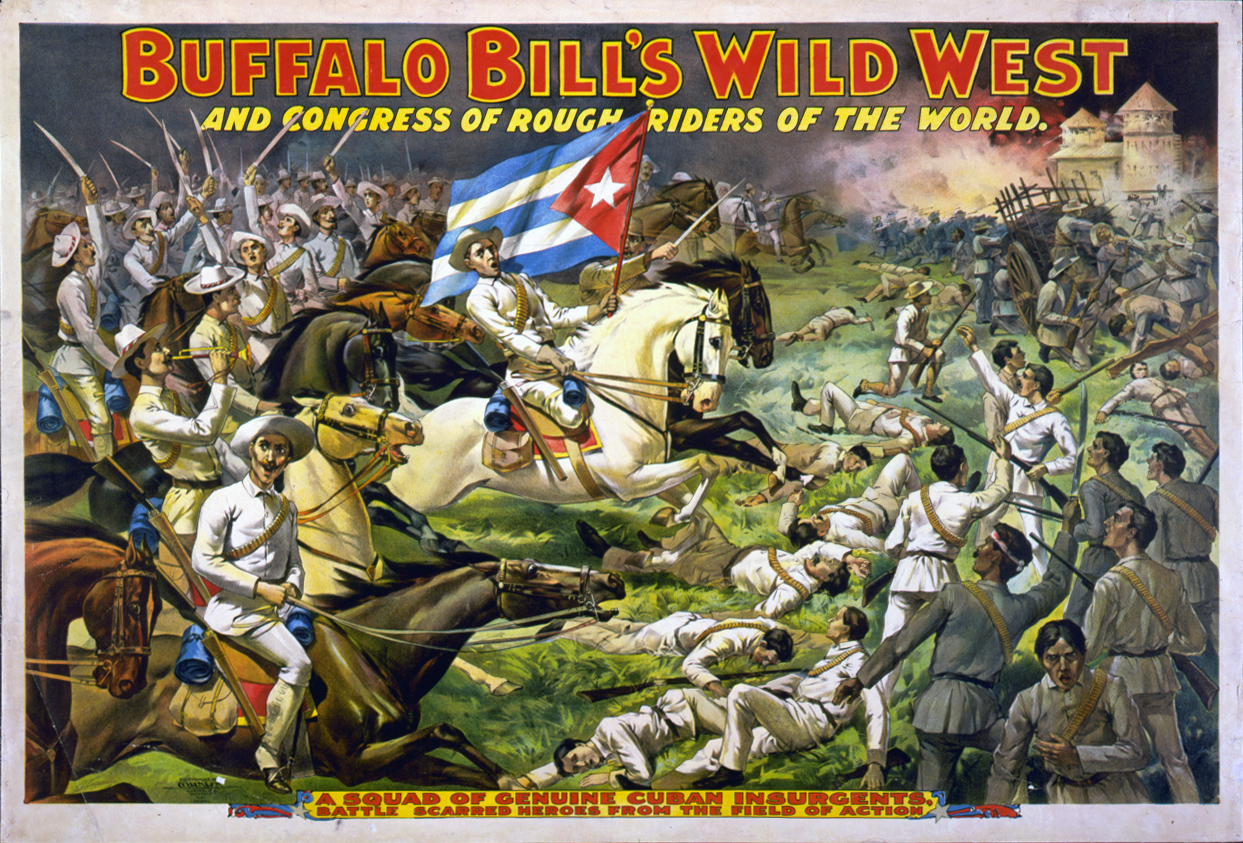
The play Don selected was also unusual. Arthur Kopit's indians was written at the height of the Vietnam war and transposed that conflict to the setting of Buffalo Bill's Wild West Show one hundred years earlier.
This was unlike the mostly traditional fare we had seen before—classic texts and box sets—it was a challenging script full of allegory and history that we had a responsibility to get right.
And, in order to get it right, we started to work on the show soon after the start of the school year and some nine months before opening night.
This too was a departure from what we had come to understand as standard operating procedure. Up to this point, we had seen productions gear up about six weeks before opening with only cursory design conferences and perfunctory production meetings. We knew that all the directors really wanted was a floorplan so that they could begin rehearsal.
Don wanted more than that.
It was important to him that his design team tear into the play and really understand both the given circumstances—Buffalo Bill, the Wild West Show and the fate of the American Indian—and the inspiration—the Vietnam War circa 1968.
We read a lot.
We read books about Vietnam and we read books about Buffalo Bill and the American Indians. We learned about Wounded Knee ad My Lai. We learned about Annie Oakley and Chief Joseph, General Westmoreland and Defense Secretary McNamara. We learned about Tet and about the Sun Dance.
We were excited by the pageantry and scale of the Wild West Show and sobered by the Trail of Tears.
Along the way, we talked about how to represent the events of the play, how to convey the gravitas of the histories within the context of the Wild West Show.
For a long time, our meetings focused on the climax of the play in which one of the central characters dies during the Sun Dance. How would we make this moment have a real impact on the audience?
When the character dies, the audience should not only know, but also feel the significance of the moment.
Being children of our age, we first proposed a variety of effects that had, as their foundation, things we had seen on TV or in the movies, but these were being too realistic; outside the world of the play we were preparing.
The solution we arrived at—and it really did feel like a group decision—was to embrace the allegory of circus and consider what were some of the more death-defying acts of that world. Several were considered before we arrived at trapeze.
Once mentioned, it seemed the only rational choice.
The character would die by appearing to launch herself off the trapeze bar only to catch herself at the last minute by her feet.
A dramatic moment to be sure, but was it the most dramatic?
And then it was proposed that the moment happen downstage center and as close to over the heads of the audience as we could manage.
After she was “dead” and swinging over the audience by her ankles, the other “indians” in the cast would ceremonially lower her from the bar and bear her offstage.
Now we had a show.
***
I had volunteered to serve as stage manager for the production so it was my job to keep a record of our production meetings. I kept the notes as proposed, elaborated, incorporated or discarded.
As the process went on, I began watching Don as he listened to the student designers share what they had learned and present their interpretation. He would ask questions, solicit input, offer suggestions all without appearing to have any agenda.
And all the while he was sketching on whatever paper was in front oh him. Scrolls were a favorite subject, but as the design neared its final form, he seemed to be drawing more and more circular forms in keeping with the agreed-upon floorplan.
I should say that there were some initial misgivings about this protracted process. Surely, at some point, Don, the experienced designer, would dictate what he actually wanted.
But that is not what happened.
The final design presentations were, as I recall, made just before rehearsals were to begin.
I watched the presentations and I watched Don. I saw the confidence that real research and preparation had given to the students and I saw what I thought was a smile on Don's face and then I just knew that he didn't need to give us the answer he wanted because he had spent the entire year leading us to it.
I was the last to leave before Don and I asked him if that was indeed what had happened. To his everlasting credit, he never once confirmed my thinking, but he also never denied it.
Don had designed a show that was unlike anything else we had done and, regrettably, would ever do again while providing a learning experience that was every bit its equal. We thought we were learning from each other and truly collaborating, but, like the safety cables that kept the actor on the trapeze from losing control and crashing, we were never in any danger of falling.
That was his gift as a designer and as a teacher: he treated students as peers and no idea as stupid. He inspired us to challenge ourselves and to believe that almost anything was possible when we got together to tell each other stories in the dark.
Indians was a singular experience and one that both inspired and frustrated me and the rest of the team. Knowing how work can be created and how rare it is to find yourself among generous creative people makes it a real challenge to not be in their company. That some of my colleagues from that show went on to be instrumental in the founding of Cirque du Soleil is a testament to their talent and vision. That the rest of us continue to seek truly collaborative partners is a testament to Don's lasting impact on our lives.
***
More than a decade ago, Don and I had one of our many coffee meetings and engaged in a thought experiment about how best to teach the essential knowledge of the various live entertainment production skills areas. Stripped of the arbitrary learning modules imposed by a master schedule and just concentrating fulltime on one subject area at a time, how much time did you really need?
Course by course we broke them down and recognized that the actual contact hours of a typical semester were rarely more than forty.
That recognition ultimately led to what is now the Stagecraft Institute of Las Vegas an immersive hands-on training program lighting and scenic technologies, design and allied crafts.
Now in its tenth year, the program is a lasting tribute to Don's commitment to education and empowering students which, as it turns out, continues to be a revolutionary idea.

Monday, December 21, 2015

Cast Iron and Mayonnaise


As I drove my shovel across the concrete floor and into the pile of oily metal shavings, I could hear it echo through the plant. It was quiet for the first time in a week and it was also the first time I had a real sense of what we were doing.

Little more than a week earlier, as I once again found myself out of work, I called the temp agency to see if they had a new assignment that would fit my rather eccentric skill set. To my surprise, they had something they described as an “auction helper.” Great! I had organized several auctions and so I accepted the gig that started the very next morning.

Getting an assignment before the holidays was huge and having a paycheck before Christmas was even bigger.

So, the next morning, armed with no other information than a job title, I showed up to the site in my khakis, open-necked dress shirt, sweater and a notebook.

I should have known better.

The job site was a now-shuttered manufacturing plant on the edge of town. According to the For Sale sign, it was three-quarters of a million square feet. According to some of the plant's former employees that I would later meet, the plant used to make axles for military and civilian vehicles.

It had been a heavy industry that employed generations of people over its sixty-seven year run. These were the jobs that allowed people to build a life for themselves and their families. These were the jobs our grandparents had and that our parents and other political leaders believe are still out there. These were forty-hour-two-weeks-vacation jobs that led people into the middle class. And they made that journey by the sweat of their brow and the skill of their hands.

Like the great medieval churches with stone steps transformed into abstract shapes worthy of Henry Moore, signs of the plant's heavy use were everywhere: painted steel railings worn raw, doorknobs polished bright by hundreds and thousands of hands, grease-stained lockers and everywhere the evidence of time passing as dust, metal and new technologies accumulated layers in a cake.

The plant had closed for the last time about two months earlier. The company had moved out the machinery and the people they wanted and now hired a contractor to sell off the rest.

The day I started was the preview for the auction. It was an opportunity for prospective buyers to look at the items and decide what they were willing to spend.

It was also a chance for me to explore the building and soak in its history.

That first day, I was assigned to work security. It was my job to patrol a section of the plant and make sure the customers weren't adding, or subtracting, items from any of the defined lots.

It was pretty light duty for the most part given that many of the lots were heavy machine tools that would require forklifts to pry from the shop floor.

The lots were being sold as-is-where-is which, in most cases meant contents included. In my area that meant cabinets and shelving full of bits and tooling used in those heavy machines.

And when I say “bits” you might be tempted to think in terms of the cracked plastic drill index you inherited from your father, or the bits that came with the router your in-laws gave you for Christmas, but you would be mistaken. The bits I am talking about were the size of a football and weighed about as much as the average third-grader.

My bosses with the auction seemed convinced these items would be in high demand and made certain I paid close attention to them. So, for eleven hours, I walked my post in the southeast quadrant and was interrupted only occasionally by potential buyers.

I herd many more buyers than I saw—sound now carried freely through the plant. It rushed to fill the space left by the missing employees and the relocated machines.

Every once in a while, my pacing was interrupted by a passing electric cart. Security, plant staff and my bosses would each make passes to check up on me and make certain no one was trying to steal the building.

At the beginning of the day, I was overly optimistic. I thought I was an overweight guy in need of some exercise so I will embrace this opportunity to walk and thus draw down my reserve of spare calories. By the time I was working on my second layer of blisters I began to actively consider what it would take to highjack one of those cards. It was a big plant, how quickly would they find the body, really?

My beat covered six distinct “neighborhoods.” There was a testing area next to the loading dock to verify that materials received were up to spec, the room for tooling, a machine show, a sharpening area and two different areas for machining parts.

The quality control area was set-off from the plant as a sort of building-within-a-building. The equipment in this area was all white and looked barely used. If it were a jewelry store, you would know just by looking in the window that you would never be able to afford anything inside.

The tooling room had a living history museum quality to it in that it was full of all manner of unusual things that you wanted to know how they were used.

The sharpening room was another building-in-building, but instead of looking like a jewelry store, it had a quality like those settings they make at Disneyworld that look like you just missed whoever it was who worked there. The room looked like a roadside garage from a time before the interstate highway system.

The machine shop was tucked away in a corner at the intersection of two firewalls. It was dark and well away from the skylights that seemed to be in every other part of the building. The drab cement walls and concrete floors were the same oily black color and, if you strayed from the beaten path you could hear the crunching sound of metal shavings under your foot.

The machines in this area were all painted a kind of blue-green that you might only see in the gyms of older schools and municipal swimming pools. These were unquestionably durable tools made from massive shapes formed in molten cast iron. Sheet metal—the mayonnaise of our modern age—was used sparingly to house switches and enclose massive copper fuses.

But more than anything else, more than the massive scale, functional design or uniform color, what you noticed about this equipment were the wheels, knobs and levers used to control them. You noticed them because they were shiny and they were shiny because of the decades of polishing they received at the hands of their operators.

Perhaps I should explain, for those of you who haven't been to a science museum, that axle are more complex than just a piece of pipe and some bearings. In order for cars to turn properly, the wheels on either side of the vehicle have to turn at different rates. When you turn left, your back right tires have to travel a lot farther than the left. They are powered from a single engine turning at a constant rate, but the wheels, periodically have to travel at different speeds. To be able to do this and also rotate both tires at the same speed when traveling in a straight line requires gears, lots of gears and cutting those gears was the job of much of the plant's equipment.

Imagine for a moment all the steps that might be involved in making a gear from a piece of solid steel. And, while you're thinking about that, remember that where there is one gear there is at least one other and the teeth on your gear have to mesh perfectly with the teeth on that other gear that's being made by somebody else.

To even begin to get that right means that regardless of what happened before it got to you, the piece of steel, the “blank” has to be the exact size and shape of the one you made ten minutes, ten weeks or even ten years ago. And I mean it has to MATCH, or it gets expensive very quickly.

Now imagine making that gear by hand without a computer or a 3D printer or any of a thousand other modern crutches. All you have to work with is your hands, a drawing and a few measuring tools.

To do that work and do it well is a skill and one that is not learned from a book or by watching a video: it is the product—like most other things of value—of experience.

These machines in this dark corner of an idled plant showed their experience and seemed ready, at a moment's notice to go again, ready to get back to work. They were like the pets you see at the animal shelter: scarred but hopeful.

Right next door was the machining area with more modern equipment. These machines were much less interesting, much less poetic. No longer needed were the hands of experience, they were replaced by the anonymity of ones and zeroes and the inevitability of computers. No longer was uniformity a goal to be measured against, but it was an expectation and anything less was an aberration, a reject, a discard.

Very little cast iron in this room; lots of mayonnaise.

The other thing I noticed about the equipment in this room is that there was nothing shiny. You can still see the evidence of human operators as in the machine shop, but instead of well-worn controls polished bright by frequent use, you see oily fingerprints on the screens and keyboards.

Not for nothing, but this was also the only one of the rooms where oil was collecting on the floor, having leaked from one or more of the machines like the slime trail left by a slug as it squirms across your porch.

The end point of my circuit was the heat-treating area where pieces and parts were delivered into the maw of a garage-sized furnace designed to harden the steel and strengthen the finished product.
The furnace was a gruesome assemblage of ovens, piping, valves and gauges It put me in mind of the massive coal-fired blast furnaces that gave birth to the industrial age, and of other ovens that gave birth to a less innocent, more destructive age.

Birth and death.

Past and future.

Round and round I went protecting the past, presiding over its dissection and lamenting the loss of another tradition.

Lap after lap.

Less you should think me some kind of hypocrite, I will freely admit that progress is great, that technology is cool, but, for every iPhone and Tesla, there is a displaced worker left wondering what happened to the bargain made with their employer.

The employees sold their time in exchange for a promise that they would e secure in their retirement. They worked with the chemicals, they risked their health so that they could look forward to a brighter day free from worry. But, when the going got tough, the employers got going and with them went the employee pensions and their access to healthcare.

This is not a new story. It is one that has probably been repeated more than once since I began this sentence. But it's one thing to read a headline about a plant closure and quite another to look at the silent machines and tables full of tools that are out of work.

I don't mean to draw equivalence, but there is no denying a solemnity comparable to the piles of shoes that no longer have feet to protect, or footsteps to follow.

On the day of the auction, I met a number of former employees who were taking one last turn through the plant that had been a center for so much of their lives.

One woman wanted to have her picture taken in front of a giant machine because, as she said, her kids would never believe that she had run it.

There is a program I like to watch on the Science Channel called “How It's Made.” The producers sent their camera crews to factories and workshops all over the world and document the fabrication of everything from electric violins to headlight reflectors. It's a terrific program to watch and zone out to: lots of motion, very little dialogue, not much to think about. A frequent topic are the various forms of packaged foods. It can be fascinating to see the choreography of complex machinery as the product moves from ingredients to packaged piece with only nominal human intervention. Where you do see human hands they are loading the machines, or transferring product from one automated line to another.

We demand lower prices and higher efficiencies, which drives automation in and people out: this is the bright future we have set for ourselves.

What good is a bright future if you can't afford to live there?

During the week that I worked with the auction company one question came up time and again from the high bidders: what was going to happen to the building?

As far as I was able to determine, there is no plan. For one thing, it's really not suited to much other than the purpose for which it was built; and for another, who would want three-quarters of a million square feet for anything except maybe a warehouse space that would be packed by machine with goods made by other machines.

So, there I was, day after the final gavel fell, sweeping out the corners of this cathedral of work listening to every shovel hit the trash can, every stroke of the broom as it bounced off every wall. Many of the bidders have come and gone with their spoils. What's left are the discarded gloves, the partially emptied lockers and an uncertain future.

Perhaps I am more than a little sensitive to uncertain futures and the promise of work.

It's been three years since I last had a traditional full-time job and, with each passing day, I feel more like Tiny Tim with his face pressed against the window of that toy store.

Being unemployed, or even underemployed, is a lot like that oily shop floor: it doesn't take much to put you on your back.

When I was working full-time, it was easy to be cynical about the ideas of hard work and merit. These were held up as the keys to advancement, to leveling-up even as Mary-Catherine, who started after you got an office with a window and you got written up for coming in late that one time. I always thought there would be other turns, another hand when the cards would come my way.

Standing on the snowy side of that window, things look a lot different. Work is more like a privilege: something you got to do instead of had to do.

I noticed that in the assignments I have had since being a temp worker, I have resisted stopping work, having to take breaks, or even lunch. Perhaps it was for fear of not measuring up in some way, but, most likely, it was because I had a very clear sense of how ephemeral a job can be.

I get that times have changed and that global competition requires a nimble economy and an even more nimble workforce, but work is a contract where each side benefits.

For the last generation, the benefits have been something other than mutual and much less than equitable. Somehow, it has become acceptable to move away from thinking of labor as a partner in corporate success to being now seen as a millstone around the company's neck

I wouldn't have a job without this shift in mindset, but I also know that I don't have much of a future.

Like the items up for auction, I am wearing my own identification tag, hoping that someone will see the value, bid on me and put me back to work.

Dark thought indeed for a holiday season, but not entirely out of keeping with the season.

Even as the snow stubbornly, miserly, refuses to fall, darkness crowds in, if only to provide stark contrast for the inflatable Homer Simpsons and the cartoon Minions.
Stark contrasts are what this time of year is all about: barren trees festooned with colorful lights, fist fights among adults over toys that will bring the most joy, celebratory feasts in the midst of so much poverty and hunger.

These are among the many threads that continue to bind us to Dickens Christmas story of so long ago. Progress was also rampant in mid-nineteenth century Britain enriching many good men of business while sending many more to the prisons and the workhouses. Scrooge is the poster child for this modern times and he, quite literally, has to be scared into changing his outlook, to start making mankind his business.

It surprised me to find, as I made my laps around this soon-to-be-abandoned cathedral, that it was not Scrooge that I was thinking about, but Old Mr. Fezziwig, his first employer.

Fezziwig's business also closed, but not because he chose to move it to a place where labor was cheaper, but because he didn't. By today's metrics that would make Fezziwig a loser, a bad business man. And perhaps he was, if dollars and cents are the only yardstick. They were clearly not his yardstick. He honored his responsibility to the people and the families who worked for him.

As I passed the giant ovens I couldn't help but wonder what it would take to scare our modern-day scrooges into a new perspective and different priorities.

I should have perhaps added pages ago that I really do like the holidays but, as they seem to keep coming around faster and faster each year, it seems important to look beyond the Chia pets and the larger flat-screen and remember that not everyone gets a turn, or rolls double-sixes. Like the machines, the tools and their displaced operators, everyone deserves a second chance.

Happy Christmas.

Saturday, August 23, 2014

Until the Fish Started Talking

First, a joke:
There are these two fish in a tank and one turns to the other and says, “I am really hoping you know how to drive this thing.”
Comedy, as I learned from a very young age, has a great power to alter your circumstances, lift mood and reduce tension.  Like that joke, comedy plays on your assumptions about words and their meanings.  You think you understand what is going on right up to the point where the fish start talking.

I have always been fascinated by funny.

I grew up around funny people, people who liked to listen to and tell stories about one another.  Many times these stories would start with "Remember the time you..." and involve some sort of embarrassing experience like the times I got my dad's car stuck in a snow bank, or in the mud, or somebody else's fender.  They weren't always funny for me to listen to, but they seemed to make other people laugh.
On holidays, we would gather with cousins and there was a kind of competitive comedy festival where the adults and the kids would each try to come up with the next clever quip, or funny story.  It was not by accident that one of our family's elder statesmen was a master of the shaggy dog story.

There was a kind of a farm team system at the kids table where we would jockey for position, for the chance to be heard by the adults.  To graduate from the kids table was to be granted entree into the adult conversation, to compete for the floor, for a chance to be heard.

If you opened your mouth at one of these gatherings, you had better know exactly what you were going to say.  Nature and my extended family both abhor a vacuum and if you couldn't get your words out in that first fraction of a second, it was on to the next person.  And lest you think that because you didn't say anything you were somehow immune from ridicule, you learned very quickly that the success of getting a laugh lasted but the blink of an eye, but the failure--any failure--had a half-life measured in forever.

How to tell a joke, to lighten the mood, change the subject, to alter perceptions was a survival skill and one that I needed to learn.

As a kid, I remember spending Friday nights watching "Rowan & Martin's Laugh-In" with its rapid-fire assault of knock-knock jokes, one-liners and broad sketches. I may not have been old enough to understand all of the references, but I was well aware of its effect. At the end of a week, where the news seemed to be full of the war in Vietnam, protests on college campuses and riots in the streets, it was a welcome respite to be able to laugh when some celebrity, or political figure, said “Sock it to me” and then got doused with water.


How did language have the power to transform people's attitudes? 

I remember having a subscription to Jack & Jill magazine. The only part I remember was the joke page.
Q: What state is high in the middle and round on both ends?
A: Ohio?
Q: Why is your heart like a policeman?
A: It follows a regular beat
I would copy down these magic spells in an effort to decipher their power.
But saying funny words was not the same thing as being able to say things in a funny way.
In among our records, between the soundtracks to “Doctor Dolittle” and “Chitty Chitty Bang Bang,” we had a copy of Bill Cosby's “Why is There Air?” This record was my first introduction to comedy storytelling. It was a revelation to hear how he got laughs without jokes or any punchlines, in the conventional sense. He was just telling stories in a funny way. He thought funny.  To this day, I am in awe of his standup and have no idea how it works. I have tried to tell stories from my own life in a funny way with only indifferent results.
As I got older, I discovered the daytime talk shows and the comedians who were their staple guests. Mike Douglas was on in the mornings and Merv Griffin was on when I got home from school. Over time, I got to see everyone from George Jessel to George Carlin, David Brenner to David Letterman. It was a senior seminar in stand-up.  I did my best to soak up their material so that I could repeat it at the dinner table, or on the walk to school.
I was never the class clown, but I was a fringe dweller: I was smart enough to never be popular and fat enough that I was never going to be accepted. So I tried to be funny.
Another big comedy influence was the Carol Burnett Show.
I never was a big fan of Lucille Ball, or Dick Van Dyke, but the Carol Burnett Show came along at exactly the right time for me.
Though well-written, this was a performer's showcase where each week Carol, Vicky, Harvey, Tim and Lyle took the material and sold the heck out of it. They routinely took the amusing and made it hilarious.
The highlight of the broadcast was any sketch featuring Harvey Korman and Tim Conway. Putting them together was a masterstroke.
Korman stuck to the script and Conway refused to rehearse so when the time came to shoot the sketch it had real spontaneity, it had comic life. You could see the fear in Korman's eyes because he had no idea what his scene partner was going to do next. The surprise would frequently cause Korman to break up which only encouraged Conway to go farther.


I would watch these moments—I still watch them whenever the infomercial for the “Best of” DVDs comes on—and be just amazed at the performers who were having fun, were fully in the moment, so in touch with their creativity that they could take whatever came at them and turn it to comedic effect.
I am the person who rewrites life so that I sound better. I think of the right thing to say only after the audience has left and the moment has long passed. The performers I was most in awe of were the ones who could, like Conway and Korman, take from, and work with, whatever came at them in real time.
Shortly after the Burnett show left the air came “Saturday Night Live.” Like many of my generation, I was drawn to the guerrilla style of the show and had my favorite Not Ready for Primetime player.
Initially, I was a Chevy Chase fan because he did “Weekend Update” and said cleverly written and well-timed words. But, lurking in the background, was John Belushi. From the very beginning, he was something different—even for that show.
Belushi was a force of nature. He didn't just say funny things, he was funny. There is a reason why his standout performances are largely dialogue-free. He could use words (“Cheeseburger”), but he didn't need them. He could get a laugh with a look and those eyebrows.
He could play a killer bee with such honesty that you couldn't help but laugh and he could sell a song like Randy Newman's “Guilty” so well he could make you cry.
There is a reason why I don't watch the show anymore. When you see the vitality of sketches like “Samurai Delicatessen” where Belushi and Buck Henry are playing the truth of their absurd premise, the stock sketches of the current show, with the recurring characters and their stiff catchphrases ring hollow by comparison.


Also from Saturday Night Live, and his brilliant comedy records, I came to be a fan of Steve Martin. What drew me to his work was the relish with which his on-stage persona was discovering his inner sense of the ridiculous. So what about energy crises, Watergate and global unrest, it's time to recite the Non-Conformists' Oath.
Martin's thoughtful comedy about the absurd in everyday life helped take ourselves and the times in which we lived less seriously.
A little banjo music makes everything okay.
I could not throw myself into a situation like Belushi but I was one of those annoying teenagers who looked for any and every opportunity to say “Excuuuuuse me!”
I was looking for a release, my own opportunity to let loose the way that Martin did when his character had an attack of “Happy Feet,” or when Belushi turned a summersault to the strains of “Somebody to Love.”


These guys were my proxies, my avatars, whose joy at being on stage could be mine, if only for a moment.
I remember when Belushi died in 1982.
I felt that loss personally.
I am not sure that I could have explained it at the time, but as they kept replaying the footage of his body being carried out of the Chateau Marmont Hotel, I felt as though they were taking away something that belonged to me; the training wheels had been removed from my bicycle and I was going to have to navigate the world on my own.
Belushi had introduced me to the blues and to soul music, to a kind of relentless forward momentum that had made him seem impervious to real life and an aspirational role model. And now he was gone.
I read a lot of the material that came out after his death about his demons and dependencies. I read them, at first, because they seemed like a way of preserving my connection to his comedy, his legacy, but I had to stop because they eventually seemed more intent on dwelling on his clay feet than his comic genius.
At the time of his death, I was twenty-one and, like most at that age, trying to figure out my place in the world and how to tell my story in my own voice.  I wanted to transform my circumstances.
When I was in high school, I discovered the works of Raymond Chandler and they spoke to my teenage sense of dislocation, corruption and disappointment. His mean streets of Los Angeles were my mean corridors and locker rooms; his first-person private eye who was too stubborn to know when he was holding a losing hand, was my self-centered loner who couldn't seem to find his way into an open field.
I wanted to be a writer, but I was concerned that I would have nothing to say and no one to say it to. All of my influences, my comedy mentors, were interesting people who said interesting things in interesting ways and represented something I could never live up to.
This perhaps explains my fascination with Robin Williams.
To watch him work was to see an idea as it came to life, like the first kernel in a Jiffy Pop pan, and then be joined by another and another, each careening into, and bouncing off of, all the others until the pan was no longer big enough to contain them.
The process of being a grown up is one of finding ever more lines within which you must stay, but, at least in public, those boundaries seemed not to apply to him. The size of the stage never seemed to limit his ability to conjure up a situation and a character for him to play and that can be intoxicating, especially for someone like me trying to find their voice.
Though he may have tried to distance himself from it, the character of Mork from the planet Ork was an ideal one for him. Mork was discovering the whole world and everything in it for the first time and he could react and associate without any restrictions, like a new-born. His character was able to say things that we all were thinking, but didn't dare say out loud.
To watch Robin Williams play was to feel safe enough in your own ideas that maybe you could play too.
I will leave it to others to talk about what it took for him to go on stage and be that person. We all have things to run from and places we go to feel a sense of freedom. We all have leashes that connect us to the real world, his just seemed a lot longer than the rest of ours.
I am certain that, after four decades in the public eye, being seen only as a clown was a strain—it would be for any artist—but the Pagliaci cliché is not big enough for him either. I have no special insights here, just a life spent trying to figure out how to tell my own story. It seems to me that you work with the tools you have until they don't serve you any more and then you pick up new ones. New tools suggest new possibilities and new directions. New tools can also breathe new life into the old ones. That more people will choose to remember the genie from “Aladdin” than his performances in “One Hour Photo” or “Insomnia” is unfortunate but understandable.
What I know is that to tell a joke well, is to tell the truth and that truth is not always pretty.
As the news came out about Robin Williams last week, I was reminded of Belushi's last night and how then, as now, they were together, no doubt trading stories, living in the moment and making each other laugh.
Like most, I have been looking at clips online of Robin Williams appearing on talk shows all over the world and laughing again and being awestruck anew by the force of his comic character. I know that he has inspired me, I know that I regret there will be no more opportunities to experience his talents, but I am also strengthened by the experience of his work to tell my own stories and get my own laughs.

I have a better sense of what my verse will be.
Thank you and goodbye.

Sunday, June 15, 2014

Fish are Born to Fly


I grew up around salesmen; excuse me, “account executives,” or “customer relationship managers” as they are now called.
My dad was a salesman.
It took me a long time to figure that out, because every time I asked him what he did, he would give me a different ambiguous answer. At one point, he told me he was a fireman. I knew this wasn't true, but it did explain his preference for black and white dogs.
My dad was not a person who dealt in metaphors, but his choice of fireman, was, as it turns out, a pretty accurate one. Like firemen, sales people face risk every day. They know winning and losing like few others and, try as they might, they live and die by forces that are beyond their control.
My dad's professional life spanned a period in history when selling transformed the world and was, in turn, transformed by it. Sales created opportunities, fueled business, created jobs and moved people up the socio-economic ladder. Salesmen are also the ventriloquist puppets spouting the magic words dreamt up by the dark lords in advertising.
When times are good, it's because salesmen are there to stoke the fires of good fortune and, when they're not, it's because some salesman took all your money in exchange for a bag of smoke.
That's a lot of pressure.
My dad would bring his friends home after work and they would drink and unwind. Our home was a kind of half-way house, a decompression chamber where they could purge the bad gasses from their blood before they made the final push to the surface.
It's ironic that nitrogen should be a common problem for both deep sea divers and salesmen. In one instance it's a by-product of their work environment and, in the other, a poison in the air they breathe.
My dad's friends were loud and funny guys. These were guys who liked nothing more than to make fun of one another, but who knew they were like the floats in a toilet tank: the first to reach top when the water was going up and with only a slender lifeline to keep them from going down the drain when it was flowing the other way.
The ephemeral nature of their work made each success and every failure keenly felt.
There were days when we children would be paraded out into the street to see somebody's new car, or motor-scooter, or when all the wives would get some elaborate kitchen appliance; and there were others when money was scarce and ends did not meet.
My dad came from a time when you did not talk about money. That he chose to sell investments must have made a difficult job even harder.
I don't have a clear picture of this, but, based on my own responses to money, I believe my dad was very generous with his friends and loaned money as much to help as to change the conversation to anything else.
I only recently learned that my brother and I share the same abhorrence of the splitting the bill negotiation. We will pick up the whole thing just so we can talk about something else.
What helped my father in his work was his curiosity. He seemed genuinely interested in people.
I had the good fortune to travel with him several times and he always made it a point to sit at the bar because, as he said, that was where the action was. One of his favorite stories was of the time he met the man who claimed to be the biggest pornographer in London.
My dad had accounts because he made friends. He made friends because he was always ready to help.
As I got older, I began to understand that my dad's willingness to help was not always reciprocated, that the people he loaned money to didn't always pay it back, that “friends” didn't always watch out for one another.
As I got older, I understood that my dad was not a saint, he was a salesman.
I've heard it said that every generation is a reaction to the one that came before. Liberal parents begat conservative children; religious parents have atheist kids.
What does that mean for kids of salesmen?
This is a question I have been wrestling with for my whole life.
The question becomes particularly relevant as I again find myself at something of a career crossroads.
I have been posting my resume to countless job search and staffing websites, hoping to win the lottery and come up with the magical combination of words and phrases that will help me get through to a round where people and machines make the final decisions.
But if I do, if I can get in the room with another person, can I sell myself as being the right person to solve their problem?
I am not a salesman.
If I were, I would still have a job.
Despite what you may have read, being a salesman, like being a good waiter, is an art and not a “safety” job to take while waiting for your “real” career to start.
Selling is also not a con.
Persuading an Eskimo to buy an ice maker is not the same as selling shares in the Brooklyn Bridge or the Eiffel Tower for scrap. It's about identifying a need for which the ice maker is the only viable solution.
Looking for work, on the other hand, is a confidence game. Persuading an employer to invest today on the promise of future value requires a degree of confidence that is often hard to come by, especially if the job search was not planned.
To be looking for work is to be confronted with all the bad choices you made while you were working.
Once you go online to look for work, it seems the only email you ever get is from people all-too-ready to tell you what you should have done to prepare yourself for a position you never expected to find yourself in.
I can't speak for anybody else, but I was too busy working to become involved in trade associations, or programming committees, or lunchtime service clubs.
I am not positioning myself for sainthood, but I often worked through my lunch in order to meet deadlines and going to hear the weekly speaker over an anonymous chicken dish did not seem a good use of my spare time. Nobody made it clear to me that, while work may be done between eight and five, business got done and careers were made at lunch and after hours.
You would think I would know better, especially given my background as bartender to my dad's friends, but all I saw was the medicinal alcoholism and not the good business sense and career moves being made.
Now don't get me wrong, I am also not making a late-in-the-game play for a Shriner's fez, a Mason's apron, or a salesman's liver, I am just too-late recognizing the truth that we are all salesmen, or more accurately, we all need to be salesmen.
Arthur Miller's “Death of a Salesman” is a post-war allegory for America as salesman, as Willy Loman. Depending on when you ask me, you will get a different answer on how closely I identify with the role of the play's lead character, Willy Loman. Today, in the middle of another work day, as I sit in a coffee house filling out another career profile for a job that doesn't interest me, I can identify very closely.
I have never been a persuasive advocate for my “product.” I just do the work to the best of my ability. I never talked much about the work I did because anybody I might tell was either working with me, or completely disinterested.
So, I don't have the pitch and the promotional materials, to help make a good impression with the client. And every resume I write and cover letter I draft, feels like the embroidery on one of those pillows that you get at a roadside tourist attraction: attractive enough to draw your attention from across the store, but quickly unravels once you get too close.
Put me in a room with a decision-maker and I will sell myself short every time. Take me out of my work environment and ask me why I should be hired over anyone else and I will actually ask myself the question, “Well, who else are you looking at?”
By this absence of self-promotion skills, I can recognize the valuable lessons that salesmen can teach you. I am perfectly comfortable telling others that there is a life lesson in the A-B-C monlogue from “Glengarry Glen Ross,” another play about salesmen: “A-always, B-be, C-closing.”  Life is largely a transactional process:  you give to get: sometimes it's immediate and sometimes not, but always asking for the sale, for what you want is never bad advice.
Asking for the next job, even when you have one, would seem, especially from my current perspective, very good advice.
I've told people to do this, but I can't seem to do it myself, which makes it all the more troublesome that the only contacts I have had in response to my resume postings have been from companies looking for salesmen.
How can I sell insurance when I failed to insure myself against risks like losing a job? How can I seize the opportunity of “unlimited upside earning potential” when I have repeatedly failed to take advantage of the opportunity to learn from earlier mistakes?
In the end, instead of soaring with the eagles, I guess I am more of a birdwatcher: I can recognize the difference between a Cardinal and a Scarlet Tanager, but I will never be either one.

Tuesday, June 10, 2014

You Can't Handle the Truth


It was ninth grade history class....  Pretty certain about that....  Yeah.
It was DesRochers’ classroom, for sure; no question about that....
Anyway....
DesRochers’ classroom:  I think we were talking about the Middle Ages.  Could have been something else, but there is something about serfs, feudal lords and high school that seem to go together.
I don't remember anything about the circumstances other than that I closed my eyes for what I thought was an instant and, when I re-opened them, everyone in the class was staring at me.
In and of itself, that was not that unusual, I was the only person who came to class in a cardigan and a tie, but this was different.
They were telling me I had fallen asleep.
Impossible.  I had a very clear idea of what sort of student fell asleep in class and I worked very hard not to be counted in their number.
No way.
The more I insisted that I had not been asleep, the more insistent they became.  It was one of those yes-you-were-no-I-wasn't Mexican stand-offs that only ever end in embarrassment.
But how could I have fallen asleep?
There was no before and after, no day to follow the night.  One minute I was in the class and the next moment I was in the same class.
When I closed my eyes, we were talking about the Feudal System and, when I opened them, we were still talking about the Feudal System.
Nothing was different.
But what if everything was different?
What if everything and everyone in my world had been taken away and replaced with an exact duplicate.
Only these “duplicates” all knew things that I did not.
All through high school, I had this sense that everyone knew stuff that I did not.
I remember sitting in English class.  We were reading “Maggie, a Girl of the Streets” and everyone else “knew” that she was a prostitute, except me.
Or maybe it happened before that.
I changed schools for eighth grade and I remember sitting in boy's health class with the gym teacher.  What a gym teacher..., what a nightmare.  I remember he started one class by saying there are two hundred muscles in the human body.  Some smart guy piped up saying, “two hundred and one,” and the class burst out laughing.
I was focused on the rudeness of correcting the teacher and completely missed the point of the comment.  I tell myself that now, but, at the time, I most likely had no idea what my “classmate” meant.
Or maybe it was even earlier, back in elementary school, when they took the girls away to show them a special movie.
We knew it was “special” because permission slips were needed.  In those days, when our parents just assumed that teachers knew what they were doing, permission slips were the exception rather than the norm.
We needed permission to go on a field trip, but a movie?  We saw movies in class all the time, what was so special about this one?
I don't remember now whether they left the class, or they took us boys away, but it seems to me, that things were different after that.  I was like, after that, the girls had specialized knowledge that was not available to the boys.
It was like they had the secret of fire and we were just a bunch of apes freezing in the dark.
School went from being a place where you got teased because a girl liked you to a place where you got teased because you liked a girl.
It was a little while later that we boys got our own permission slips and I got scared.
I didn't want to know what I didn't know.
I don't really have a good illustration for this, but perhaps you will remember when there were kids in your class who wanted to tell you the “truth” about Santa Claus?  Or, maybe they even came out and said that he didn't exist?  Do you remember that space where you didn't want to know that?  For whatever reason you chose not knowing over knowing?
Even though something like that is impossible to un-know, even though the de-stabilizing amputation of certainty begins to eat at you like gangrene, you cling to the idea of Santa like the figures of Need and Want huddle at the feet of the Ghost of Christmas Present.
My world was confusing enough already.  I had no room for any more secret knowledge.  If it was something that “they” hadn't wanted me to know, then I was fine continuing my ignorance.
I was the only one to take that position.
And so, while my peers were headed off to the basement screening room, I went to the library and looked at some educational materials about the Canadians at Ypres in World War One.
These were allegedly “health” films.  They were supposed to help us understand the changes that would come to us with the onset of puberty.  My body had been letting me down for a decade; I could only assume that any changes were not going to be upgrades.
This was a fork in the road for me where opportunity and responsibility parted ways and I took the road less traveled.
A little later on, there was another round of films and I could no longer avoid going.
We were marched off to the damp brick-lined basement that looked like the sewers of Vienna as depicted in “The Third Man.”
There I was in a closed, darkened room with my snickering male classmates learning about what was normal and healthy in between scenes of rockets launching into space.
Opportunity versus responsibility.  Where my classmates were excited to see a rocket launch, a blow-up, I was thinking that if nobody made any sudden moves then nobody would get in trouble.
 

Perhaps that was it.  Perhaps that was my moment where I was offered a choice in life and I got it wrong.
Most everybody I have ever met seems to have learned to value opportunity over responsibility.  All of the people I am most drawn to see only possibility where I can only see barriers and obligation.
I would like to be one of those who see possibility in every situation, but I can't seem to make that change.
I remember one night in graduate school where I had gone back to the room of a woman who, by all rights, should have had nothing to do with me.  She wasn't only above my grade level; she was an entirely different school.
She was beautiful and she was spending time with me....
Inconceivable.
I had parked my car in front of the theatre, which was okay at night, but subject to a hefty fine and towing during the day.
I figured this was not going to be a problem because when women asked me to their rooms all they wanted to do was talk—usually about their problematic boyfriends.  An hour or so and I would be on my way home.
But this was a different situation entirely.  She had apparently not received the memo on how such evenings were supposed to go.
There was touching.
There was kissing.
Some other stuff too.
But the more stuff went on, the more I kept thinking about my car being ticketed, or worse....
Yes..., yes I did.
I left.
I chose my Pinto over this beautiful woman, because I'm an idiot.
Because it was the responsible thing to do.
This is not a story I am proud of; that is the story of someone who has a bug in his programming; someone lacking critical operational instructions.
It's decades later and I should be comfortable with the choices I have made, but I most definitely am not.
I know I want more opportunities and fewer responsibilities.  I am drawn to professions that are founded on it.  I have wanted to be a writer since before high school and yet my dominant, responsible, self also knows that success in that business depends on the ability to see and seize opportunities and, whereas, I can be counted on to close the refrigerator door, I can't ever seem to be able to convince other people of that.
Perhaps the problem is that I equate responsibility with order and opportunity with chaos.
My recollection is that all through elementary school I was pretty good in math.  Not stellar, but I got my work done.  When we got to algebra in high school, I was pretty good at that too.  It was orderly and made sense to me.
And then, in ninth grade, we were introduced to functions.
Ninth grade was not a good year for me.
Functions left me stymied. With its multiple paths to the same answer, I was awash in chaos and uncertainty.  It was the anti-algebra, the drunk cousin of geometry.
In algebra there was the cruising lane and the passing lane and, unless you were passing, you knew exactly where you stood.  But with functions the rules no longer applied:  park in the left lane, pass on the right, drive faster on the berm.  It was whatever you could get away with.
This great unsettling has continued and, if anything, gotten worse.
I keep looking for lines to color inside and, just as fast as I can find them, somebody seems to be following me around with an eraser.
At some level, I can appreciate why conservatives are always angry.  They too seek the comfort of absolutes in an increasingly unfamiliar world.  They cling tenaciously to ideas that our quicksilver society has either abandoned, or outgrown, as a way of putting a fence around their common ground.
The more they will advocate for whoever has the biggest piggy bank, the more they seem to cling to definitions, rules and regulations.
And, before anyone stops reading because I'm slagging on the right, all of the same things can, and should be, said about those on the left.  The only difference is that their approach seems more inclusive.  Like the difference between trying to join the chess club and joining student government:  only one of those groups is going to teach you how to play chess.
The older I get, the angrier I get about this gap in my knowledgebase and I'm not talking about the health films.
I grew up thinking there were norms, rules, truths and all I have seen is people working hard to make sure those rules don't apply to them.
Every time somebody cuts in front of me from a right-turn-only lane, I can feel every one of those two hundred muscles clench.  Every time I make a wrong turn and take the time to go all the way around the block, or go to the next exit before turning back, I feel like a chump, like I have been conned, like I was accused of sleeping in class.
As far as I know, we continue to teach kids the difference between right and wrong while living in a culture that celebrates those who choose to live outside the rules.  America's superhero used to be Superman who fought for “truth, justice and the American way” even while flouting the laws of physics.  Our leaders fight for camera time trying to appear to be of the people and possessed of the common touch only to get a job doing the bidding not of those they represent, but of those who pay for their campaigns.  We celebrate the entrepreneurial spirit, while embracing the concept of too-big-to-fail.  As a nation, we are compassionate, caring, inclusive, but, as individuals, we are scheming, suspicious and ready to step on our neighbor's throat for the right offer.
How do you reconcile those two personalities?
It's like being marooned in Opposite World.
Is this really what it means to be an adult?
Is this the best we can hope for?
F. Scott Fitzgerald took it as a measure of intelligence to be able to “hold two opposed ideas in mind at the same time and still retain the ability to function....”
Psychologists look at it differently.
Is it any wonder that, at any one time, one-in-four of us have a diagnosable mental health condition?
I have been alive long enough to recognize some of the patterns in my own behavior.  I default to taking people at their word and believing that hard work and dedication should speak for themselves.  I am embarrassed when I give the wrong answer and ashamed when my body makes a noise that I did not intend.  I assume everybody else thinks the same way.
And then I turn on my TV each night only to learn how misinformed I am.
Is it crazy to expect some constants, some absolutes, some order?
Is that a crazy dream?
I am still struggling to make my world make sense, find my place, figure out where I fit in—all those things that I was worried about in high school when I opened my eyes.